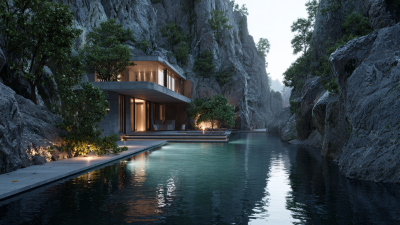
Revolutionizing Design with Ai 3d Rendering Techniques for Stunning Visuals and Efficiency
The integration of Ai 3D Rendering techniques is reshaping the design landscape, offering designers unprecedented capabilities in creating stunning visuals with remarkable efficiency. According to a report by Grand View Research, the global 3D rendering market is expected to reach $12.57 billion by 2027, growing at a CAGR of 22.2% from 2020 to 2027. This explosive growth is driven by advancements in artificial intelligence, which enhance rendering processes, reduce timeframes, and elevate the quality of visuals produced.
In industries ranging from architecture to gaming, Ai 3D Rendering enables professionals to visualize complex projects more effectively, streamline workflows, and significantly reduce costs. With the ability to simulate real-world conditions and provide interactive experiences, Ai 3D Rendering is not just a tool but a revolution in design methodology, transforming how creativity is expressed and delivered across various sectors.
Exploring the Emergence of AI in 3D Rendering Design
The emergence of artificial intelligence in 3D rendering design marks a significant shift in how artists and designers approach their work. Traditional rendering techniques often required extensive manual input and time-consuming processes, which can be a barrier to creativity and innovation. However, with AI-powered tools, designers can harness algorithms that not only speed up rendering times but also enhance the quality and realism of visuals. By analyzing vast amounts of data, these tools can predict and produce accurate representations of light, texture, and depth, transforming the way visual narratives are constructed.

Furthermore, AI in 3D rendering design paves the way for more efficient workflows. Designers can engage in a more iterative process, experimenting with multiple design variables in real-time. This capability allows for rapid prototyping and gives rise to more daring creative choices without the threat of excessive time investment. As AI continues to evolve, it bridges the gap between imagination and execution, empowering designers to focus more on conceptual development rather than technical limitations. Thus, the integration of AI into 3D rendering not only revolutionizes aesthetic outcomes but also cultivates an environment ripe for innovation in design practices.
Transforming the Design Workflow with AI-Driven Technologies
Artificial intelligence (AI) is fundamentally transforming the design workflow, driving efficiency while enhancing creativity. According to a report by McKinsey, companies that leverage AI in their design processes can see productivity increases of up to 40%. By automating repetitive tasks such as rendering and modeling, designers can focus more on creative decision-making and innovative solutions. AI-driven tools can analyze vast datasets to provide insights into user preferences and market trends, allowing for more informed design choices that resonate with target audiences.
Furthermore, AI 3D rendering techniques are reshaping how designers visualize concepts. A study from Gartner reveals that organizations employing advanced rendering technologies can reduce project turnaround times by 25%. Integrated AI systems can produce stunning visuals in real-time, transforming client presentations and stakeholder reviews into immersive experiences. As designers harness the power of AI, the potential for collaboration and iteration expands, enabling teams to explore multiple design avenues swiftly, ensuring that the final product not only meets but exceeds user expectations.
Enhancing Visual Quality: The Role of AI in 3D Rendering
The impact of artificial intelligence on 3D rendering is profound, pushing the boundaries of visual quality and production efficiency. According to a report by MarketsandMarkets, the global AI in the media and entertainment industry is projected to reach $1.5 billion by 2024, with one of the significant applications being in 3D rendering. AI algorithms can now process images with astonishing speed and precision, improving quality while reducing the rendering time by up to 80%. This efficiency translates to more time for creatives to focus on the artistic aspects of their projects, enhancing the overall output.
Incorporating AI into the rendering pipeline not only improves the visual fidelity but also optimizes workflows. AI-based tools can dynamically assess lighting, textures, and materials to produce hyper-realistic imagery, significantly elevating the standard of visual content. Tips for leveraging these technologies include keeping software updated to utilize the latest AI features, experimenting with different rendering settings to find optimal balances between quality and speed, and training your team on these advanced tools for maximum productivity.
As the technology continues to evolve, embracing AI in 3D rendering can be a game-changer for designers aiming to create visually stunning content while maintaining efficiency. The integration of machine learning and neural networks into rendering processes equips artists with innovative methods to achieve their creative visions, making it an essential component of modern design practices.
Revolutionizing Design with Ai 3d Rendering Techniques for Stunning Visuals and Efficiency - Enhancing Visual Quality: The Role of AI in 3D Rendering
| Rendering Technique |
Visual Quality Rating |
Rendering Time (seconds) |
AI Assistance Level |
Use Case |
| Path Tracing |
9.5/10 |
300 |
High |
Architectural Visualization |
| Rasterization |
7.5/10 |
50 |
Medium |
Gaming Graphics |
| Ray Marching |
8.0/10 |
120 |
High |
Visual Effects |
| Volumetric Rendering |
8.5/10 |
200 |
Medium |
Scientific Visualization |
| Deep Learning Enhanced |
9.0/10 |
90 |
Very High |
Product Design |
Efficiency Gains: How AI Reduces Time and Resources in Design
Artificial Intelligence (AI)
is transforming the design landscape, particularly through its advanced
3D rendering techniques. By automating complex rendering processes, AI significantly
reduces the time designers typically spend on these tasks. Traditional rendering can be labor-intensive and time-consuming, often
requiring manual adjustments and multiple iterations. With AI-powered tools, designers can quickly generate
high-quality visuals, allowing for a more streamlined creative process.
This efficiency not only accelerates project timelines but also frees up creative professionals to focus on
innovation rather than repetitive technical details.

Moreover, the resources required for design projects are being optimized by
AI technology. By leveraging machine learning algorithms, designers can predict outcomes and make
real-time adjustments, substantially minimizing waste in both time and materials. This predictive capability enables more accurate
modeling and rendering, ensuring that the final product aligns closely with the client's vision without excessive revisions.
As a result, companies can achieve
higher productivity levels and
cost savings, solidifying AI’s role as a crucial asset in
modern design practices.
Future Trends in AI 3D Rendering Techniques for Designers
The integration of AI technology into 3D rendering techniques is set to transform the design landscape significantly. As designers increasingly rely on AI tools, the efficiency and quality of visual outputs are reaching new heights. Recent advancements have showcased AI's capabilities in generating detailed and diverse marketing visuals, with businesses producing hundreds of images in remarkably short periods. This not only streamlines the creative process but also empowers designers to meet the evolving demands of consumers for personalized and innovative designs.
Looking ahead, future trends suggest that AI will continue to reshape the design industry, particularly in areas like home decor and architecture. With AI-driven platforms enabling clients to take an active role in their design projects, we are witnessing a democratization of the design process. Emerging tools are focusing on merging design data with production capabilities, allowing for a seamless integration that addresses the challenges of customization and scale. As AI continues to advance, it is clear that the possibilities for creating stunning visuals while enhancing operational efficiency will only expand, paving the way for a new era in design.
Future Trends in AI 3D Rendering Techniques for Designers